Case Study · Playbook
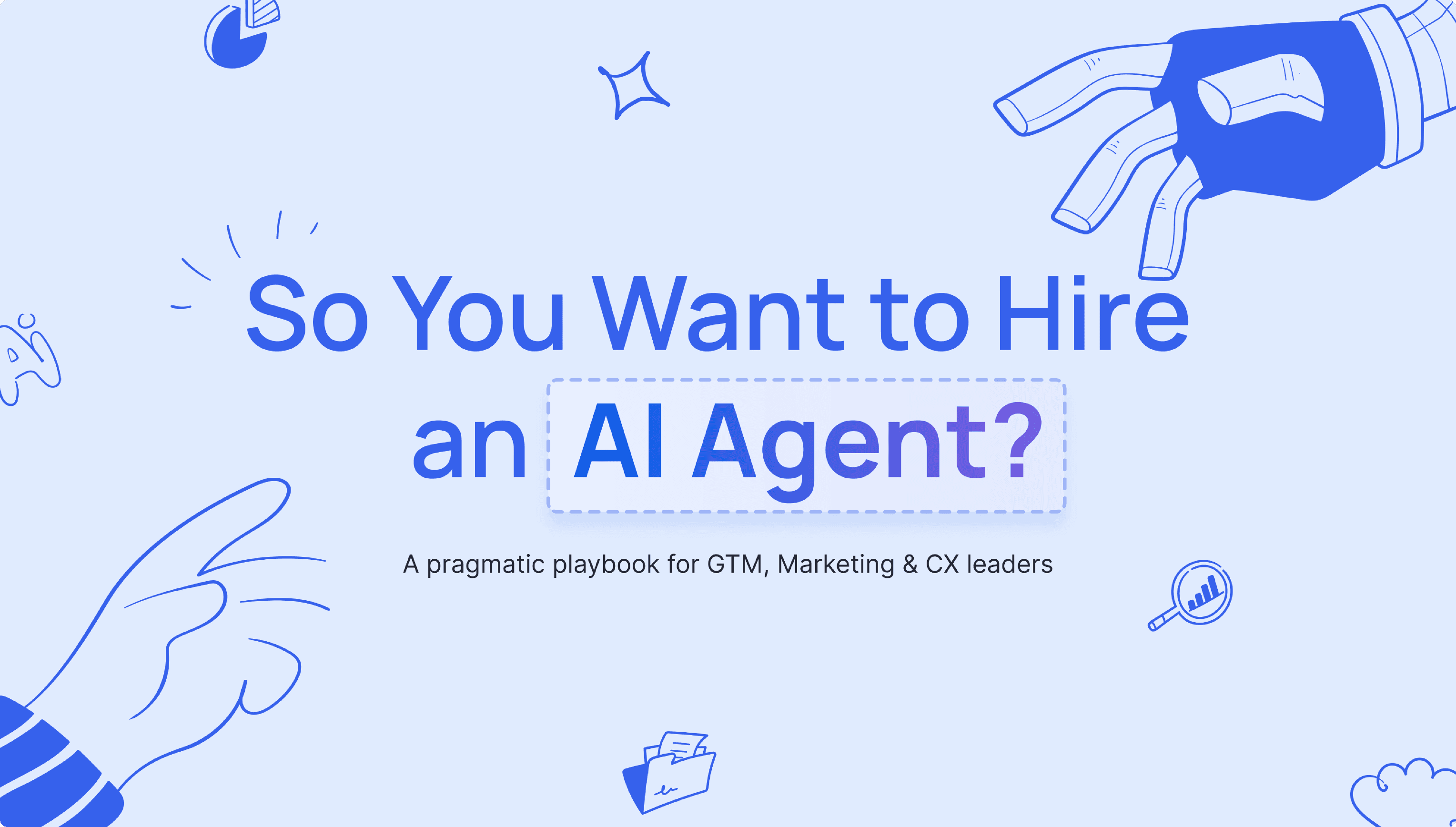
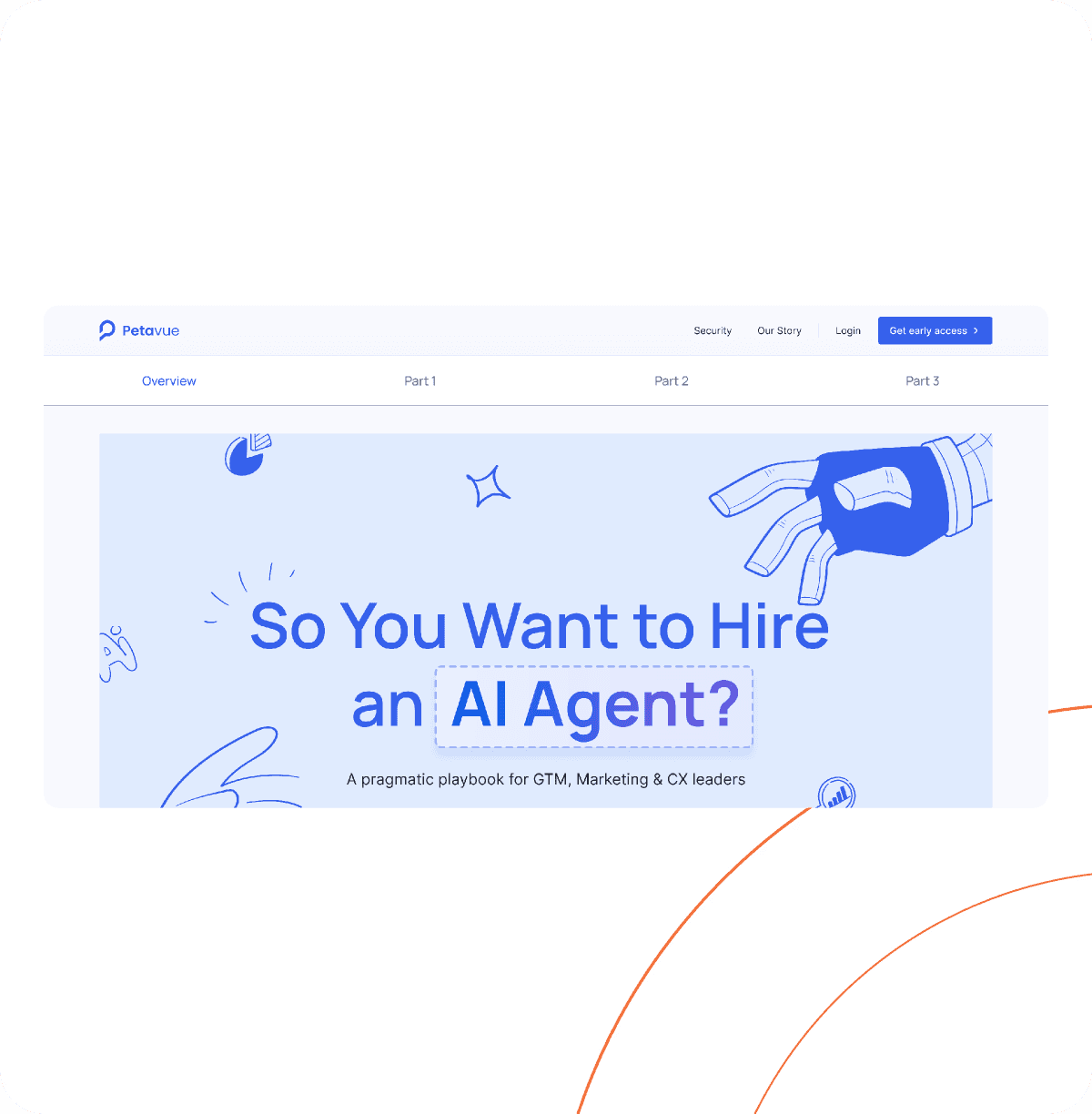
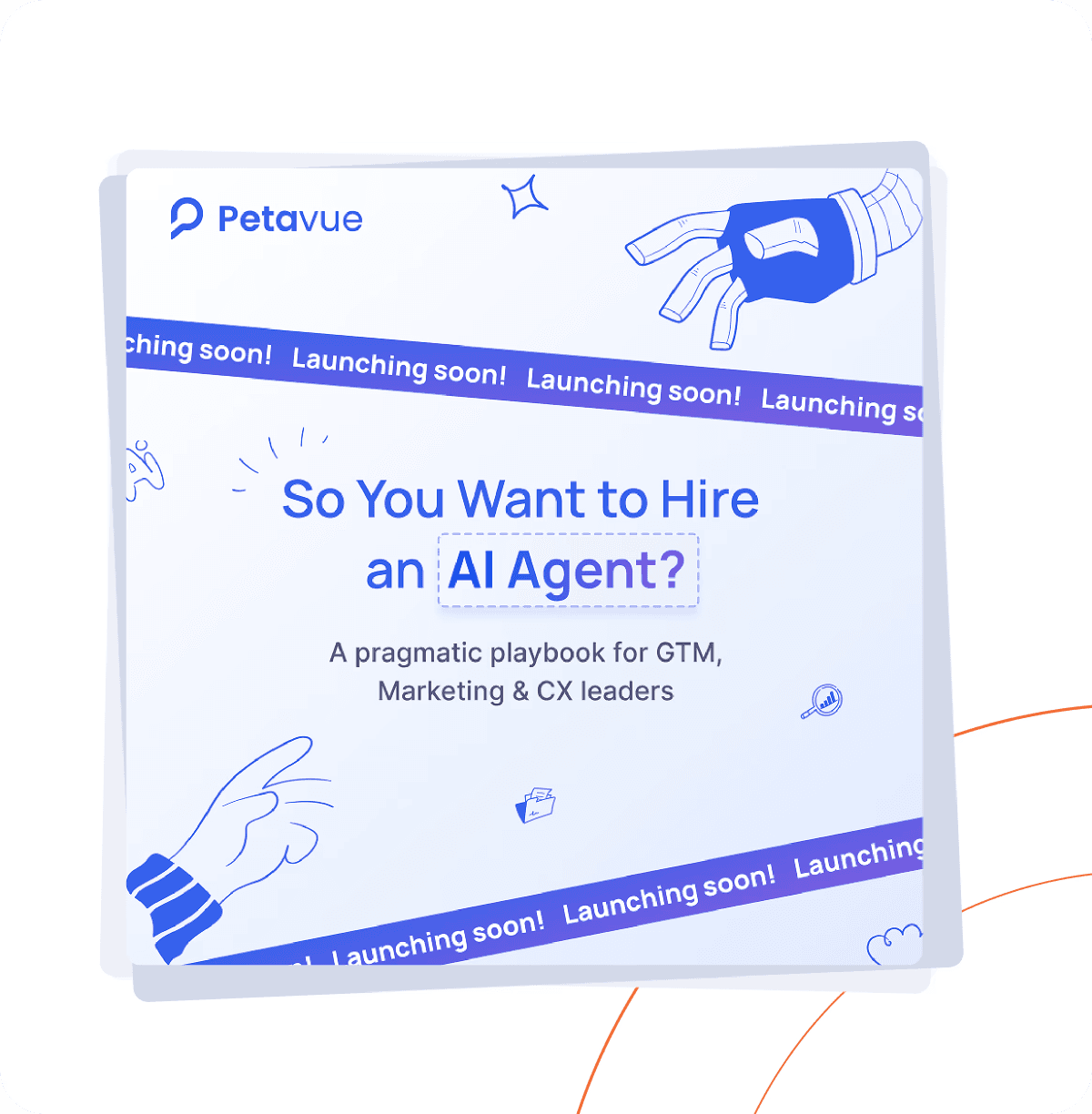
So you want to hire an AI agent?
A pragmatic playbook for GTM, Marketing & CX leaders — designed to show how AI agents actually work inside go-to-market teams. Focused on scoped use-cases, human-in-the-loop systems, and measurable impact.
Role
Design, content structuring, distribution
Scope
Marketing initiative
Output
Playbook · LinkedIn · leadership
The setting
Every AI take sounded loud. Almost none were useful.
By 2025, every founder had hot takes, every VC had predictions, every newsletter had a framework. None of it scoped down to what a marketer or CX lead could try this week. The playbook started from a different place — not by writing more about AI, but by reducing a stack of long-form conversations into something a GTM team could open on a Monday and act on by Tuesday.
The thesis
This playbook focuses on one thing — making AI usable in real workflows.
What this solves
Built to answer four specific things.
- Breaks AI agents into clear, scoped use-cases.
- Shows how humans and AI actually work together.
- Avoids abstract ideas and focuses on execution.
- Builds credibility through real-world context.
Source material
The voices that shaped it.
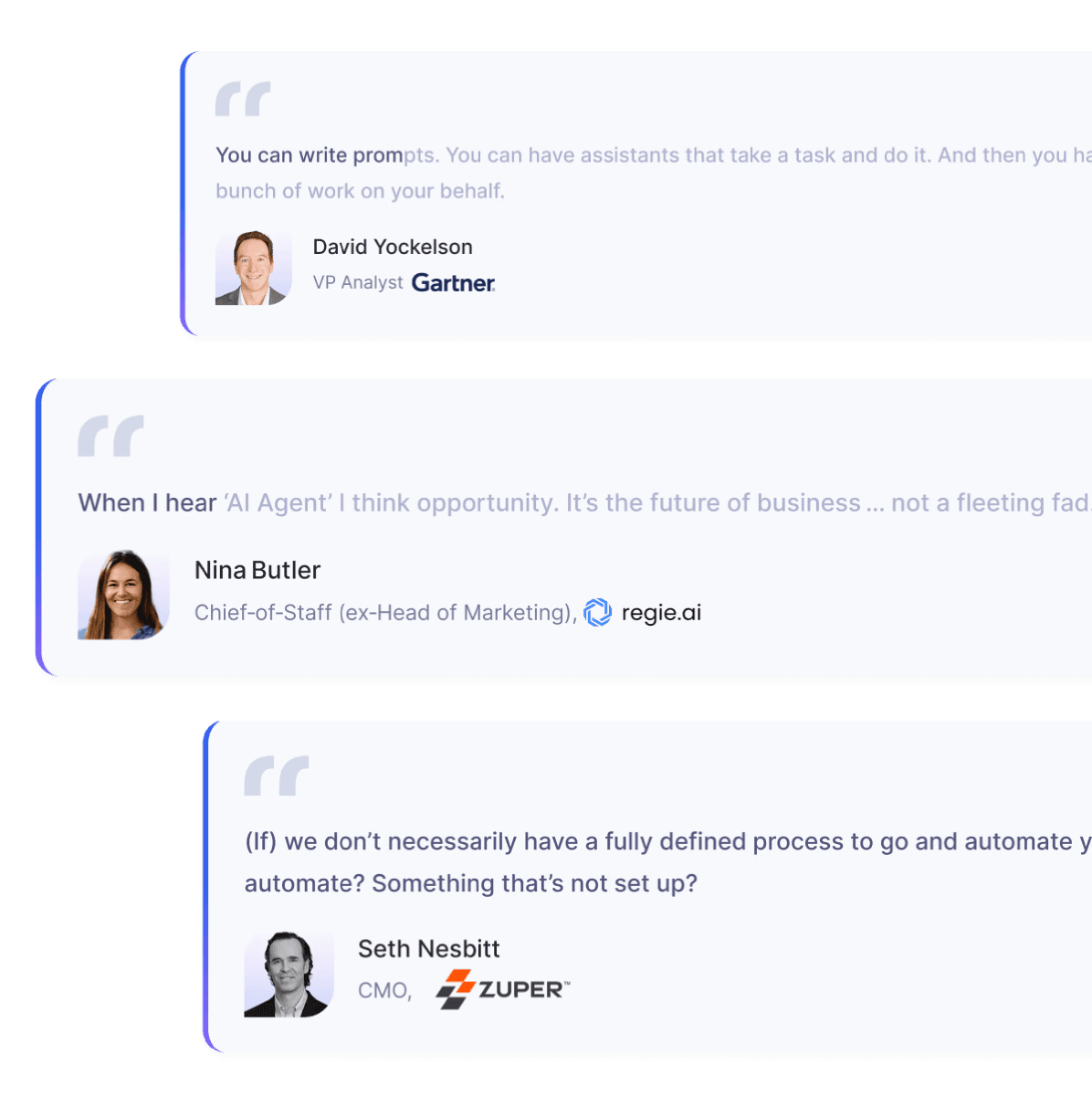
The playbook isn't built on hot takes — it's built on long-form conversations with analysts and operators who've actually run GTM during AI's chaotic moment. Three of those voices anchor the work:
On the opportunity
David Yockelson
VP Analyst, Gartner
On the operator's framing
Nina Butler
Chief-of-Staff · ex-Head of Marketing, regie.ai
On the unstructured middle
Seth Nesbitt
CMO, Zuper
The approach
From raw material to decision-focused content.
Long-form discussions weren't treated as content pieces. They were treated as raw material — to be mined, reduced, and restructured.
Key actions
- Extracted high-signal insights.
- Removed noise and repetition.
- Structured them into usable, decision-focused content.
This made the playbook feel grounded — not theoretical. The challenge wasn't adding information — it was reducing it.
Refinements
- Simplified complex ideas into clear sections.
- Designed for fast scanning, not deep reading.
- Focused on helping users understand what to do next.
Designing for clarity, building for distribution
A content system, not a static asset.
The playbook was designed so every section could leave the page — picked up as a LinkedIn carousel, a screenshot in a feed, a chapter in someone else's reading list. Distribution wasn't a downstream marketing task. It was a design constraint from day one.
- Each section could stand alone.
- Easily converted into LinkedIn posts.
- Structured for repeatable distribution.
What I did
The scope, in four lines.
- 01Designed the overall structure and flow of the playbook.
- 02Converted raw interviews into clear, usable insights.
- 03Built a visual system for readability and hierarchy.
- 04Created LinkedIn content to extend reach.
Impact
Engagement. Credibility. Positioning.
- Stronger engagement through LinkedIn distribution.
- Increased credibility due to real industry insights.
- Better traction than generic AI content.
- Positioned the org as a practical voice in AI adoption.
What I learned
Four lessons that stayed with me.
Good content needs structure, not just information.
Distribution is part of the design.
Real examples outperform generic ideas every time.
Design can simplify complex systems.
In one line
This project wasn't about explaining AI. It was about making it usable.
Up next