Reusable component library
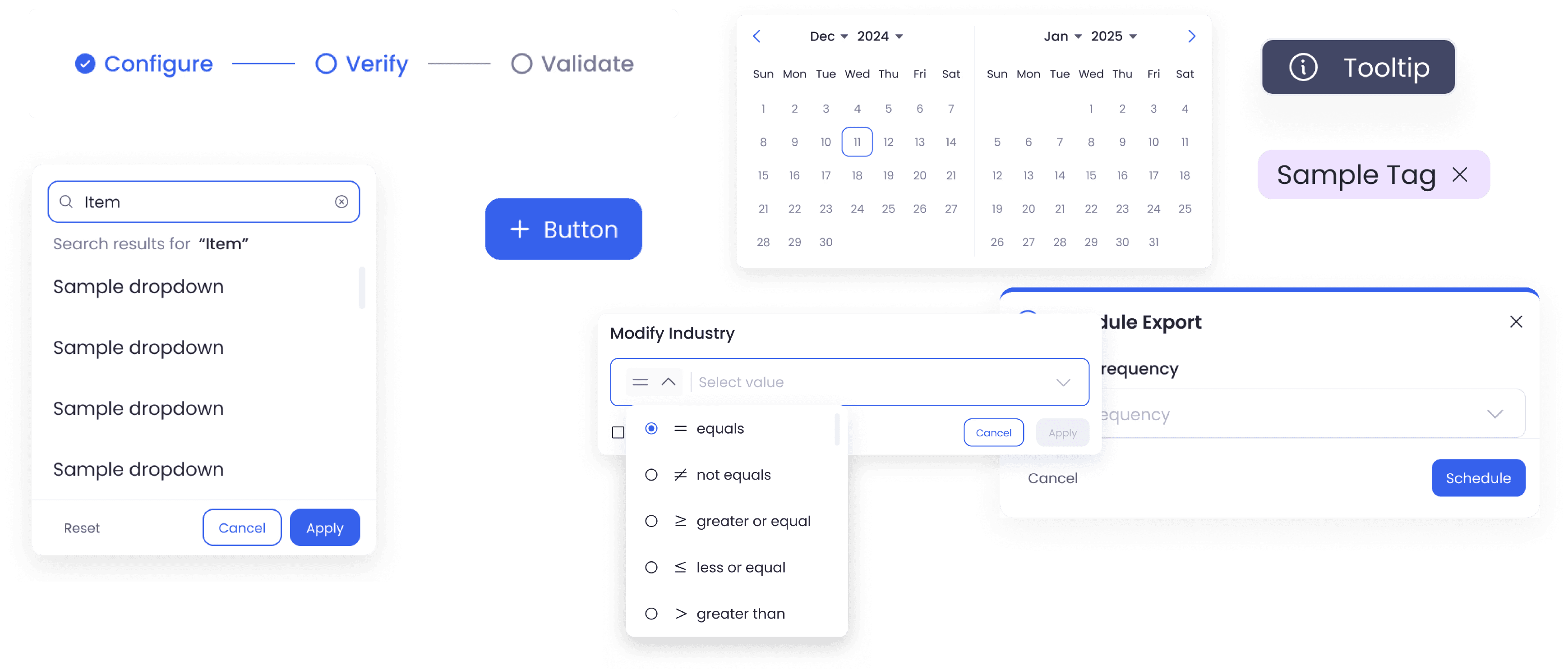
Tokens, primitives, and composed patterns covering every recurring surface — from form fields to multi-step layouts.
Case Study · Systems
Petavue's product velocity was climbing, but the design infrastructure underneath it wasn't. Screens were being rebuilt from scratch, handoffs stalled in interpretation, and every new feature inherited a new set of UI decisions. The system we built closed that gap — and made shipping the default state.
Role
Founding Designer
Scope
End-to-end product system
Timeline
15 days initial · ongoing
Team
Design + Engineering partnership
The problem
Features shipped fast, but the cost showed up downstream: inconsistent spacing across flows, three patterns for the same empty state, and design-to-dev handoffs that turned into translation work. The team didn't lack discipline — it lacked a shared, reusable foundation that made the right choice the easy choice.
Key insight
Consistency is a side effect. Reuse at scaleis the actual product — it's what turns a system from a style guide into infrastructure.
The solution
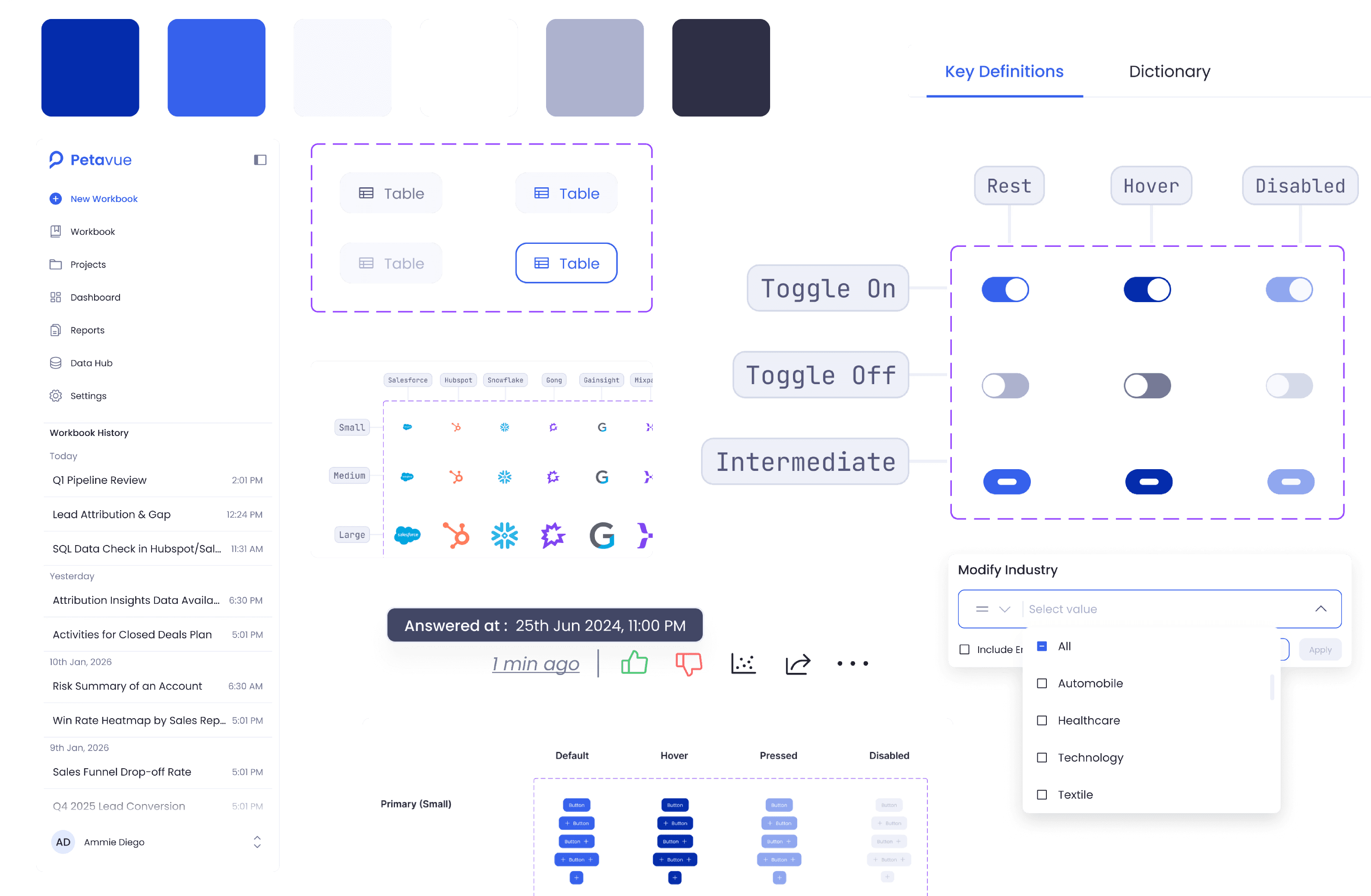
Rather than starting with a component library and hoping adoption followed, the system was scoped to the patterns that actually recurred across flows — and built so that picking up a component was always faster than re-drawing one.
Tokens, primitives, and composed patterns covering every recurring surface — from form fields to multi-step layouts.
Predictable page templates so a new screen starts at 80% and the team only designs the interesting 20%.
Components named, propped, and documented identically across Figma and code. Handoff became a copy, not a conversation.
Design decisions
Scope
We resisted the urge to model every edge case up-front. The first version covered the most-used patterns; the long tail was added as it appeared in real product work.
Ownership
Component APIs were co-designed so the Figma layer and the React layer matched 1:1. No translation tax meant adoption stuck.
Evolution
New components were added when the same pattern appeared three times in product work — not because a backlog said so.
Outcomes
Within a quarter of rollout, design time on new screens dropped 60–70%. Engineering handoffs shortened because there was less to interpret. Onboarding new designers became a one-day exercise instead of a one-month one. Most importantly, the product looked like one product again.
60–70%
Reduction in new-screen design time
1 day
Designer onboarding to first shipped flow
1 system
Across design, engineering, and docs
What I took from it
The temptation with design systems is to optimize for the system itself — the docs site, the token taxonomy, the contribution model. The work that mattered was the work that made shipping faster. Every decision was tested against one question: does this make the next screen quicker to design and easier to build?
Up next