Multi-sheet workflow
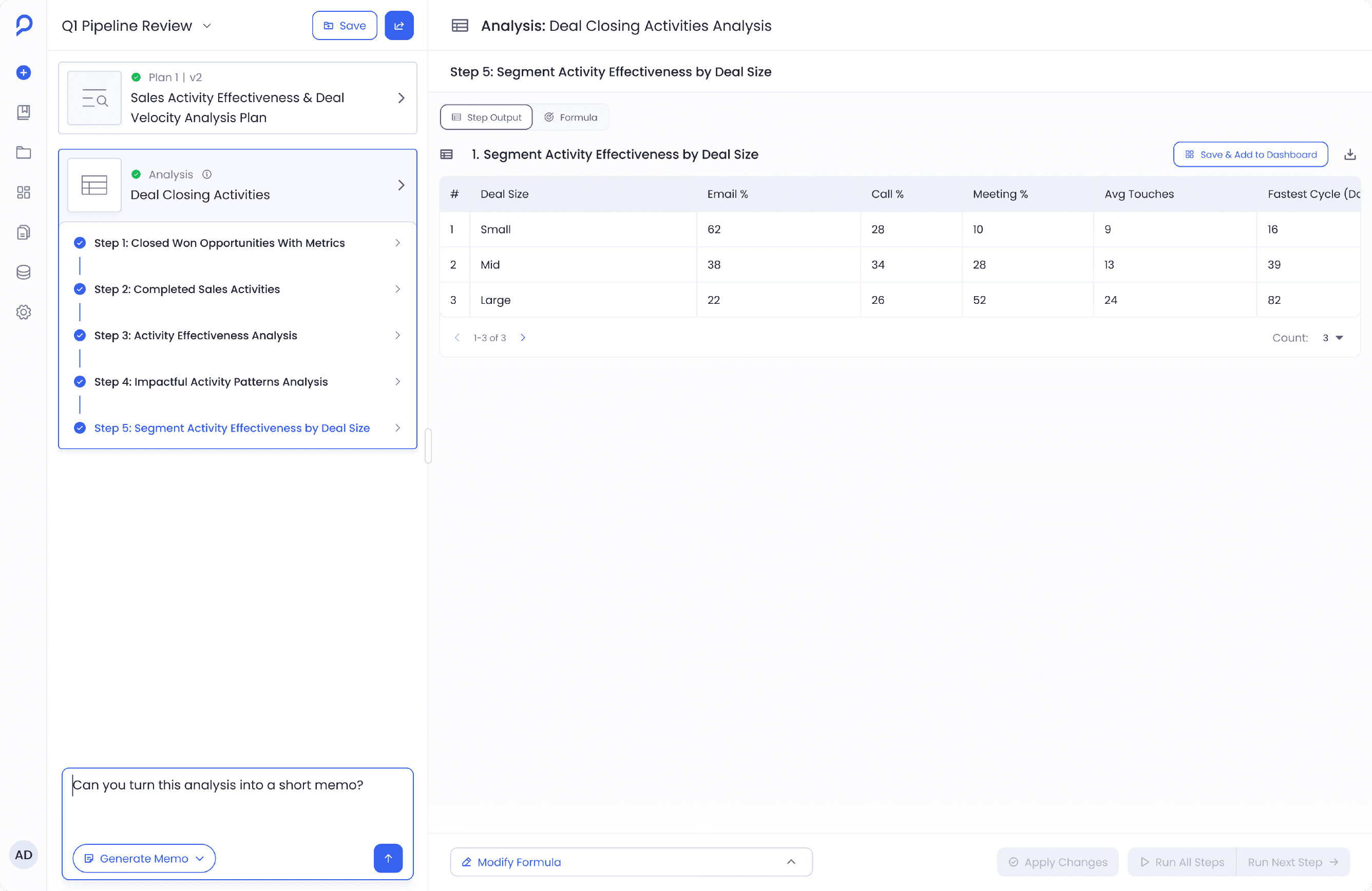
Sheets become explicit thinking steps — break a goal into stages, organize them spatially, and keep each step inspectable.
Case Study · AI · Data
At Petavue, the chat-first model worked for exploration but collapsed at decision time. Each query was isolated; insights had to be stitched together by hand. Workbook reframed the core experience around how analysts actually think — in flows, not questions.
Role
Founding Designer
Scope
Core product redesign
Timeline
2025 — 2026
Team
1 designer · 4 engineers · 1 PM
The problem
Analysts came to Petavue to make calls — pricing changes, retention interventions, churn forecasts. The chat surface answered each question well in isolation, but every decision required a chain of twelve. Context evaporated between prompts. Edits meant re-prompting. The transcript became a flat record of attempts, not a record of thinking.
Key insight
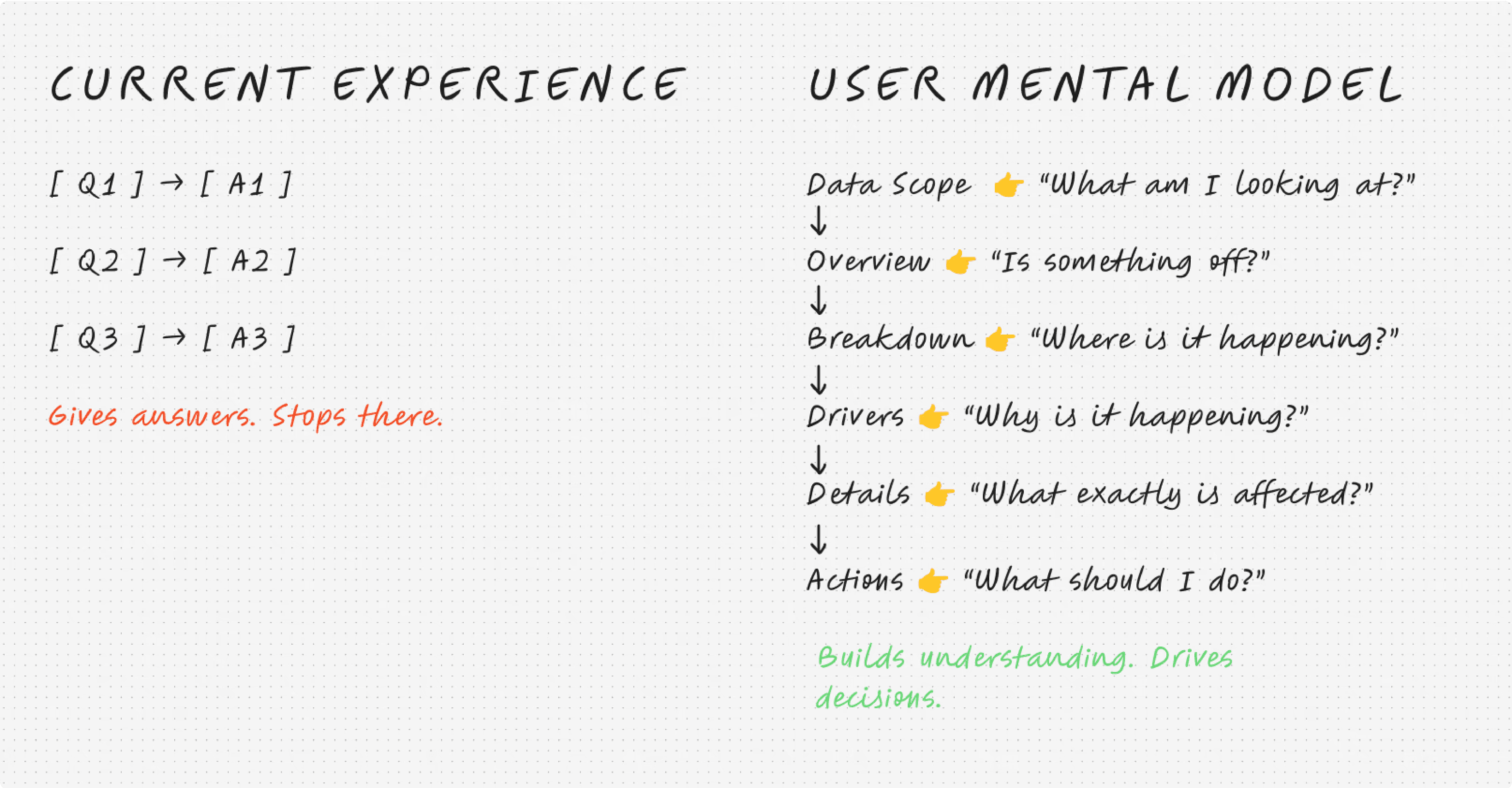
Data analysts don't think in questions. They think in flows — a goal, broken into steps, built incrementally, refined until the insight is clear.
The solution
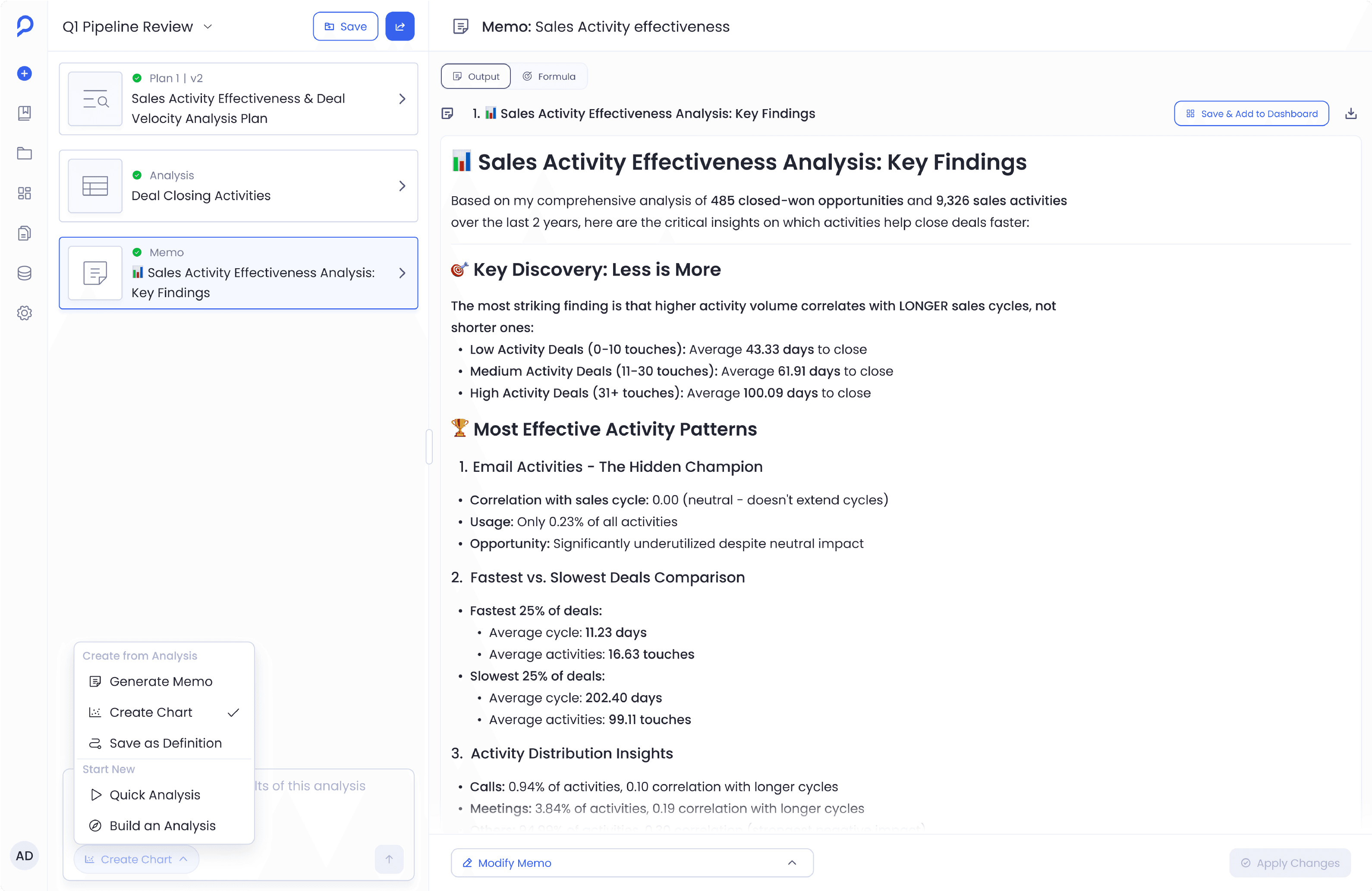
Workbook replaces the chat thread with a multi-sheet canvas. Each sheet is a discrete step in the analyst's reasoning, fully editable and re-runnable. Three product moves carry most of the weight:
Sheets become explicit thinking steps — break a goal into stages, organize them spatially, and keep each step inspectable.
Every prompt, output and edit lives inside the workbook. Pick up where you left off, branch a step, or hand work to a teammate.
Modify any earlier step and downstream blocks recompute. Iteration replaces the chat-style restart-from-scratch loop.
Design decisions
Structure
Chat looks lightweight but pushes every cognitive burden onto the user. The workbook trades a heavier first impression for far lower load during the actual work.
Iteration
The most valuable analysis happens on iteration three, not query one. Every interaction was tuned for editing, branching, and re-running — not just authoring.
Adoption
Users had built muscle memory around chat. We staged the rollout so existing prompts opened inside a workbook, letting people migrate without learning a new mental model upfront.
What I took from it
Workbook reframed how the team measured success: not the quality of a single answer, but the speed at which an analyst could refine toward a defensible decision. Behavior change carried more risk than UI change — the rollout had to teach a new mental model without asking anyone to abandon a familiar one.
Up next